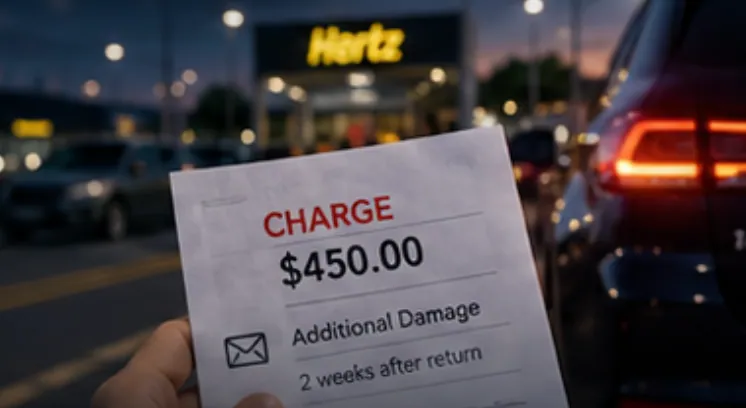
Damage charges are the single biggest source of car rental complaints, according to the UK government’s consumer guidance. They often arrive weeks later as a card deduction with little explanation. If you think a charge is wrong, this is the order to work through.
This guide is general information, not legal or financial advice.
Step 1: Don’t sign for damage you didn’t cause
If staff point out damage at return, look carefully before signing anything. In Financial Ombudsman decisions, renters who signed to accept damage or a no-damage handover at pickup later struggled to win card disputes (example decision). Write “not accepted — pre-existing” if you must sign, and photograph the form.
Step 2: Ask for the full evidence
You’re entitled to see why you’re being charged. Ask in writing for:
- The pre-rental and post-rental condition reports
- Dated photos of the damage
- The repair invoice or estimate, and how the amount was calculated
BVRLA members in the UK must provide all of these, and assess charges “in a transparent and proportionate manner” (BVRLA Rental Code of Conduct). If you weren’t present at inspection, they must notify you in writing before charging your card.
This step matters more than people think. A Which? Travel survey found 59% of customers charged for damage never received any supporting documents (Travel Weekly). Which? also found charges are often based on a “damage matrix” estimate rather than an actual repair bill (Yahoo/Which?).
Step 3: Compare their evidence with yours
Look for weak points:
- Timing. Were the “damage” photos taken days after you returned the car? One Irish renter received blurry images taken more than two days after drop-off (Irish Times).
- Pre-existing marks. Does your pickup record show the same mark?
- Amount. Is the charge for a whole panel when the mark is a small scuff?
Your pickup record is the single strongest thing you can bring. A timestamped, geo-tagged scan from the moment you collected the car is hard to argue with.
Step 4: Complain formally
Write to the company’s customer service team (not the local desk). Keep it factual: booking reference, dates, what they charged, why you dispute it, and your evidence attached. Give a deadline — 14 days is common.
Step 5: Escalate to the right body
| Where you rented | Who can help | Notes |
|---|---|---|
| UK, BVRLA member | BVRLA Dispute Resolution | Free; aims to resolve within 30 days; unjustified charges refunded in full |
| Europe, cross-border | ECRCS | Free; member companies only |
| Europe, non-member | Local consumer body / UK European Consumer Centre | Varies by country |
Note that a big brand’s UK arm being a BVRLA member doesn’t bind its Spanish or Portuguese branches (Which?).
Step 6: Go to your card provider
- Chargeback (credit or debit card): your bank asks the company’s bank to reverse the payment. It’s governed by card-scheme rules, and the rental firm can defend it, so evidence wins.
- Section 75 (UK credit cards): for services with a cash price between £100 and £30,000, the card issuer can be jointly liable for a breach of contract (FOS decision). It can fail if you paid a booking site rather than the rental firm directly (FOS decision).
If your bank handles it badly, you can complain to the Financial Ombudsman Service.
How DetectDamage.ai helps
Every step above gets easier with a clean pickup and return record. DetectDamage.ai produces a timestamped, geo-tagged PDF at both ends of the rental, ready to attach to a complaint, an ADR claim or a chargeback. It can’t guarantee the outcome, but it gives you evidence on the same footing as the rental company’s.
Protect your next rental from day one → 2 scans for £10
Frequently asked questions
How long do I have to dispute?
Act as soon as the charge appears. Card chargebacks have scheme time limits, often around 120 days.
Can they charge my card without telling me?
Under the BVRLA code, members must notify you before charging if you weren’t at the inspection.
Do I need a solicitor?
No. BVRLA and ECRCS are free and don’t require legal representation.