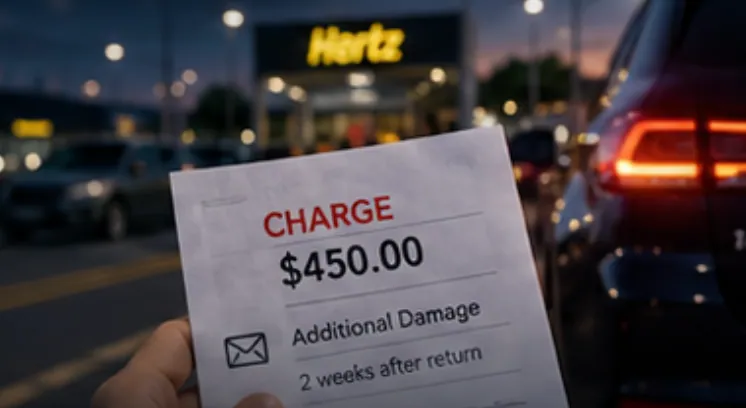
The riskiest moment of any car hire is the one you spend the least time on: handing it back. At airports you’re rushing for a flight. After hours you drop the keys in a box. Either way, the inspection happens after you’ve gone — and that’s exactly where disputes start.
Why unattended returns cause disputes
The BVRLA’s code recognises that a key source of conflict is a customer not being present when the car is checked (Fleet News). Many travellers only learn about a charge when they check their card statement back home (Which?).
The gap between drop-off and inspection is the problem. One renter in Ireland was sent blurry “damage” photos taken more than two days after he returned the car (Irish Times). Anything could have happened in that car park in the meantime.
One DetectDamage.ai customer returning a car at Lisbon airport was told about a “new” bumper scuff after drop-off. Their pickup scan showed the mark was already there.
Your 6-step drop-off routine
- Plan 20 extra minutes. Build the return into your airport timing, not the gap after it.
- Fuel up and clear out first. Photograph the receipt; fuel charges are another common complaint.
- Park in good light. Choose a well-lit bay in the return area, away from tight pillars.
- Do a full return scan or walk-around. Same angles as pickup. Include wheels, lower bumpers and the roof.
- Photograph the dash. Fuel gauge, mileage, no warning lights, ignition off.
- Record the handover. Photograph the keys going into the drop box, or get a staff member to sign the return sheet. If nobody’s there, email the branch your evidence before you board.
Out-of-hours returns
Read the terms first. Many rental agreements say you stay responsible for the car until the branch reopens and checks it. That makes your own end-of-rental record essential: it shows the car’s condition at the exact time and place you left it.
Under the BVRLA’s Rental Charter, if you’re not present at inspection the company should notify you of any new damage before charging your card (BVRLA Rental Charter). That’s a UK rule for BVRLA members — abroad, assume nobody will warn you.
If a charge arrives anyway
- Ask for the inspection time and photos.
- Compare the time stamp with your drop-off record.
- Send your pickup and return evidence together, showing the mark either pre-existed or wasn’t there when you left.
- Escalate using the steps in our guide on how to dispute a car hire damage charge.
Where DetectDamage.ai helps most
Drop-off is the scan that matters most when nobody is there to agree the car’s condition. A DetectDamage.ai return scan is timestamped and geo-tagged at the return bay, so it shows where the car was and what it looked like when you handed it over. Paired with your pickup scan, it covers both ends of the rental for £10.
Flying home? Scan the car at the return bay in under 5 minutes → 2 scans for £10
Frequently asked questions
Is a key-drop return riskier?
It removes the face-to-face check, so you carry more of the burden of proof.
How long after return can they charge me?
It varies by company and contract. Keep your evidence for at least six months.
Should I wash the car before returning it?
Not required, but heavy dirt hides marks and can be misread by scanners.