A used car can look spotless on the driveway and still hide a repaired accident, outstanding finance or a mileage that does not add up. Most problems can be caught with a few free online checks and a methodical twenty-minute inspection. And if something does go wrong after you buy, a clear record of the car’s condition on the day you collected it makes your rights much easier to use.
This guide is based on rules for England. Scotland, Wales and Northern Ireland have their own guidance, so check the version for where you live.
Before you view: the free and cheap checks
- DVLA vehicle details. Use the DVLA’s free online vehicle information checker to confirm the make, model, colour and registration match the advert. Citizens Advice says that if the log book does not match DVLA records, “You should report the seller to the police” (Citizens Advice).
- MOT history. Checking a car’s MOT history on GOV.UK “is a free service.” Look at recorded mileages (they should only go up), repeated advisories, and any gaps. Ask the seller about gaps: a car may not have needed an MOT if it was declared off the road (SORN).
- Private history check. Citizens Advice says it “will cost up to £20.” It can show whether the car is recorded as stolen, whether “the seller still owes money on the car”, whether it has been in a serious accident or written off, and whether the mileage is correct.
- Price sense-check. If the price is far below similar cars, find out why before you travel.
At the viewing: exterior
View in daylight and in dry weather if you can: rain and dusk hide paint problems. Walk round slowly, then crouch and look along each side.
- Panel gaps. The gaps between doors, bonnet, boot and wings should be even and match on both sides. Uneven gaps can mean panels have been replaced or realigned after an accident.
- Paint colour and texture. Look for a panel that is a slightly different shade or has a different “orange peel” texture. A repaired scratch is not alarming on its own; large repainted areas deserve questions.
- Reflections. Look along the car at a light source. A rippled reflection, or one that does not line up across two panels, can point to filler or a repair.
- Overspray. Paint on rubber seals, window edges, badges or trim suggests rushed repair work.
- Rust. Check sills, wheel arches, door bottoms and the boot floor. Road salt is hard on older cars.
- Glass and lights. Chips and cracks in the windscreen, cloudy or cracked lamps, and condensation inside lenses.
- Wheels and tyres. Kerbed alloys, uneven tyre wear (which can mean alignment problems), and tread depth. The UK legal minimum for cars is 1.6mm across the central three-quarters of the tread.
At the viewing: inside and under the bonnet
- Warning lights. They should all light up when the ignition is turned on, then go out once the engine is running.
- Wear vs mileage. A badly worn steering wheel, pedals or driver’s seat on a low-mileage car is a reason to look harder at the MOT history.
- Damp and smells. Lift the boot floor and check the carpets for damp.
- Everything electrical. Windows, mirrors, air conditioning, infotainment, parking sensors and cameras.
- Under the bonnet. Oil level and colour, coolant level, signs of leaks, and whether bolts on the wings and bonnet look disturbed.
- Test drive. A cold start, smooth gear changes, straight braking, no knocks over bumps, and no steering pull.
Not confident? Citizens Advice says an independent inspection “will cost around £120 to £250.” On an expensive car, that is cheap insurance against a costly mistake.
The paperwork to insist on
- The original V5C log book, not a photocopy. Citizens Advice is blunt: “Never buy a car without the log book.” Check the name and address match the seller and the location you are viewing.
- Service history: stamps, invoices, or a digital record, with mileages that match the MOT history.
- The current MOT, where the car needs one.
- Both keys, the locking wheel nut, and any charging cables for an electric or plug-in hybrid car.
- A written receipt with the price, date, registration, mileage, and the seller’s name and address.
Your rights: dealer vs private seller
| Buying from a dealer | Buying from a private seller | |
|---|---|---|
| Basic standard | Car must be of satisfactory quality, fit for purpose and as described (Consumer Rights Act 2015) | “Buyer beware” applies, but the seller must accurately describe the car and have the right to sell it |
| First 30 days | Right to reject a faulty car for a full refund | No automatic right to reject |
| Up to 6 months | The dealer should accept a fault was there at sale unless they can show otherwise | — |
| After that | Repair or replacement first; a refund may have a “fair use” deduction | Claim if the car was misdescribed |
Source: Which?. Which? also notes you have very limited rights when buying at auction, and that claims can generally be brought for up to six years after the contract (five in Scotland). You have no legal right to reject a car simply because you have changed your mind.
Why record the car’s condition at handover
Your rights depend on proving what the car was like when you bought it:
- From a dealer, a dated record of the car on collection day helps show a problem was there at the time of sale, especially after the first six months, when “it will be up to you to prove there was a problem.”
- From a private seller, your claim depends on the car not matching its description. Screenshot the advert, keep messages, and record the car’s condition when you collect it.
- When you sell, the same record protects you. If a buyer later claims a dent or scratch was there when you sold the car, a timestamped record from the day of the sale settles it.
Used car checklist at a glance
| Stage | Check |
|---|---|
| Before viewing | DVLA details, MOT history, private history check, price sense-check |
| Exterior | Panel gaps, paint match, reflections, overspray, rust, glass, lights, wheels and tyres |
| Interior | Warning lights, wear vs mileage, damp, electrics |
| Mechanical | Fluids, leaks, cold start, test drive |
| Paperwork | Original V5C, service history, MOT, both keys, written receipt |
| Handover | Screenshot the advert and record the car’s condition with date, time and location |
Where DetectDamage.ai fits
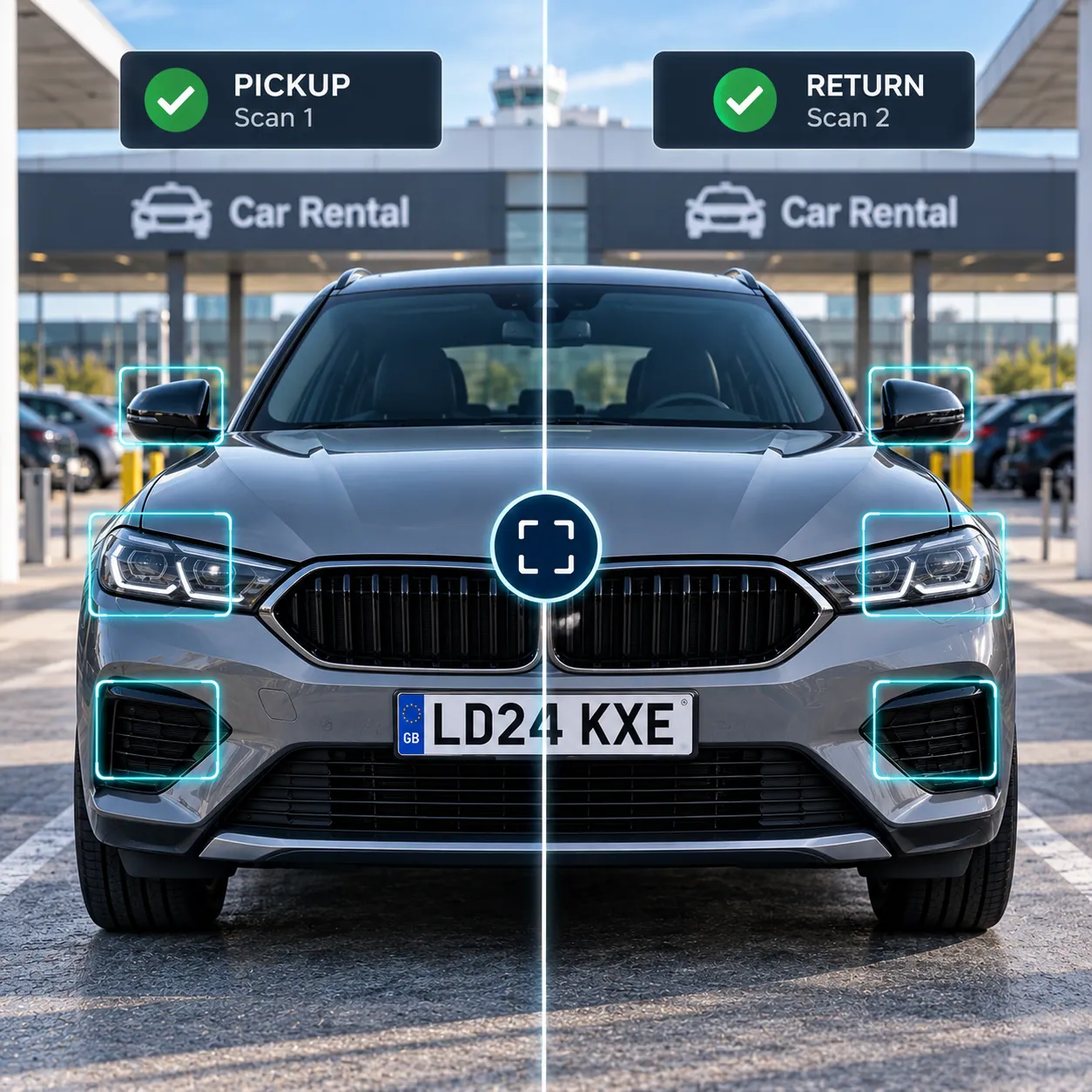
A single DetectDamage.ai scan costs £10 and is designed for exactly this: a one-off inspection when buying (or selling) a car. Open the link in your phone’s browser, walk around the car as the app guides you, and the AI highlights visible exterior damage. Most scans take under five minutes, and you get a timestamped, geo-tagged PDF report of the car’s condition at handover. It does not replace a mechanical inspection or a history check, and no report can guarantee an outcome, but it gives you a clear, dated record if questions come up later.
Buying or selling a car? Record its condition at handover → Single scan £10
Frequently asked questions
What checks should I do before buying a used car?
Check the DVLA vehicle details and the MOT history on GOV.UK (both free), and consider a private history check, which Citizens Advice says costs up to £20, to look for finance, theft, write-offs and mileage problems.
Can I return a used car I bought from a dealer?
Under the Consumer Rights Act 2015 you have 30 days to reject a faulty car for a full refund. After that the dealer can repair or replace it first, and a later refund may have a fair-use deduction.
What rights do I have buying from a private seller?
Fewer. “Buyer beware” applies, but the seller must accurately describe the car and have the right to sell it. If the car was misdescribed, you may be able to claim.
Should I buy a car without the V5C log book?
No. Citizens Advice says never buy a car without the log book, and to make sure you get the original, not a photocopy.
Is an independent inspection worth it?
On more expensive cars, often yes. Citizens Advice puts the cost at around £120 to £250, which is small compared with buying a car with hidden accident damage or a major fault.